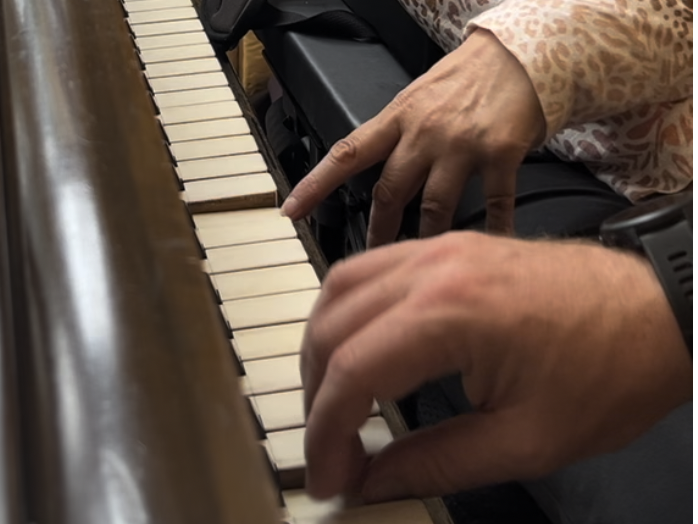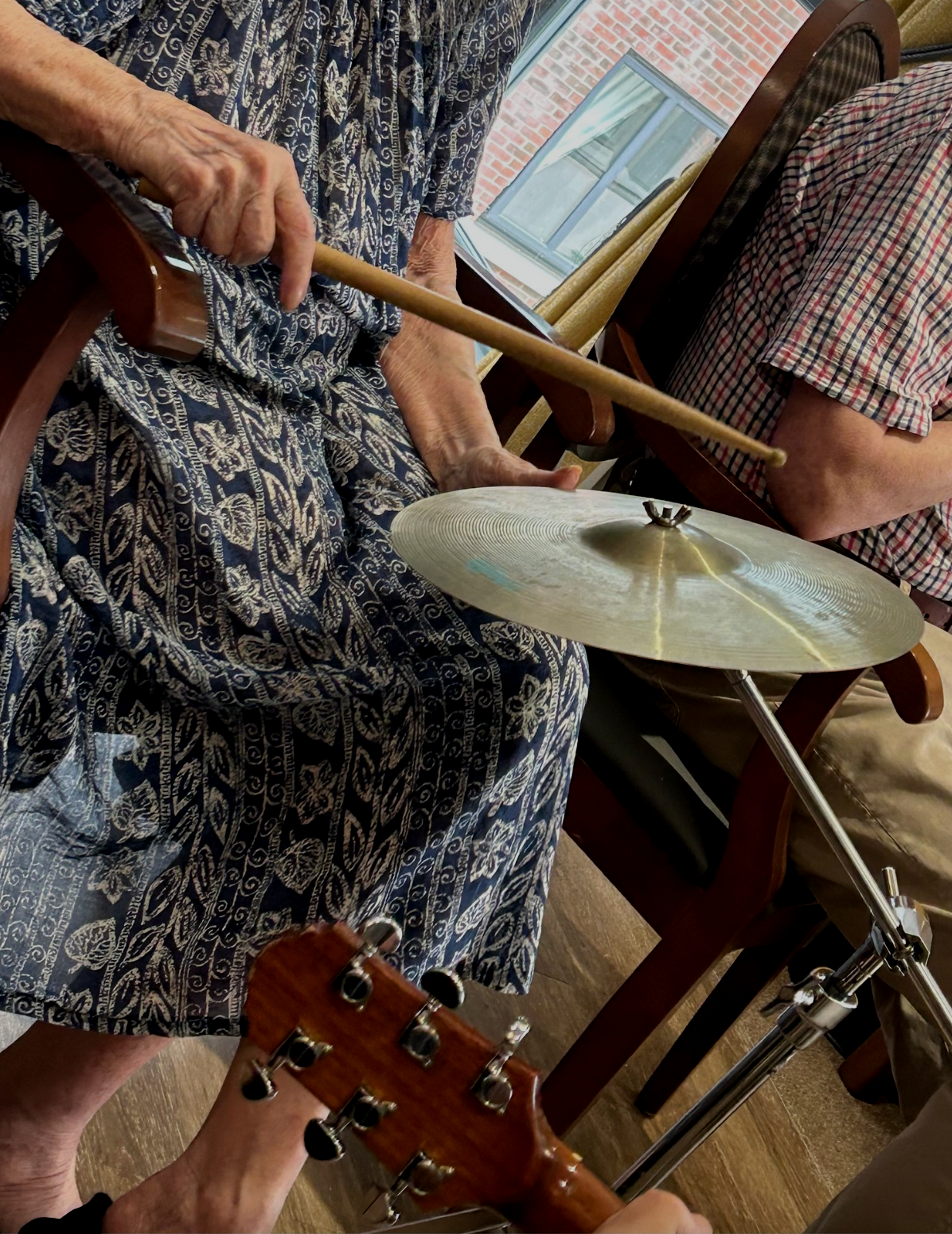
Sing, Play, Listen, Move, Remember.
Music offers many ways to engage, so it can support people with a wide range of physical, cognitive and emotional needs.
That’s why music therapy can play such a valuable role within care settings, supporting emotional wellbeing, communication and connection.
In care homes, music therapy sessions can often be lively, interactive and enjoyable.
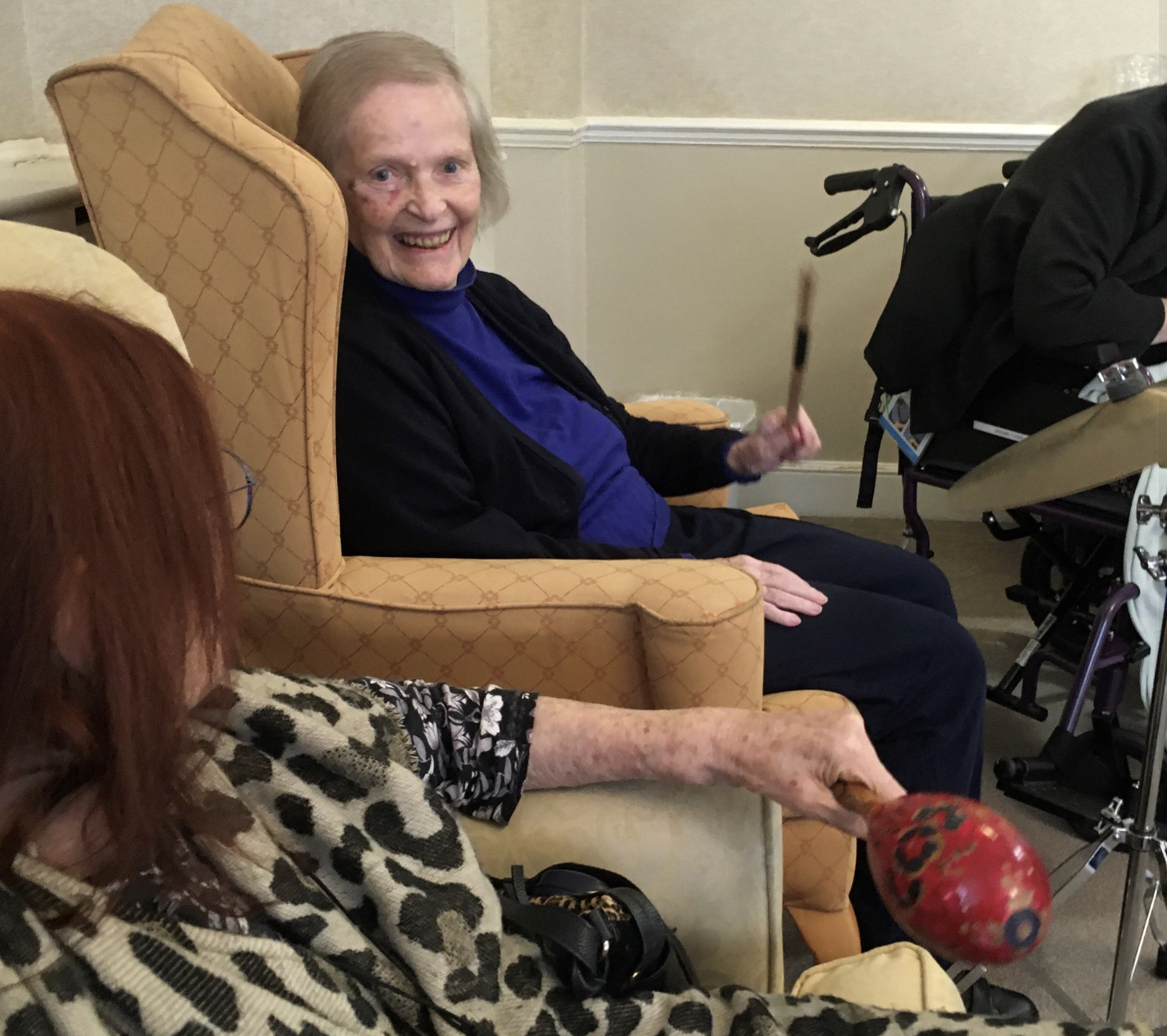
What makes it therapy rather than entertainment is the intention behind the work; using music purposefully and clinically to respond to each person’s needs.
My approach tailors the benefits of music therapy to the needs of each home, supporting individuals, groups and the wider community.
Benefits of music therapy in care homes include…
Improved emotional wellbeing
Greater engagement in the life of the home
Better communication, including non-verbal expression
Reduced anxiety and agitation
Stronger connections between residents, staff and families
Individuals
One-to-one sessions for residents who may benefit from more focused individual therapeutic work.
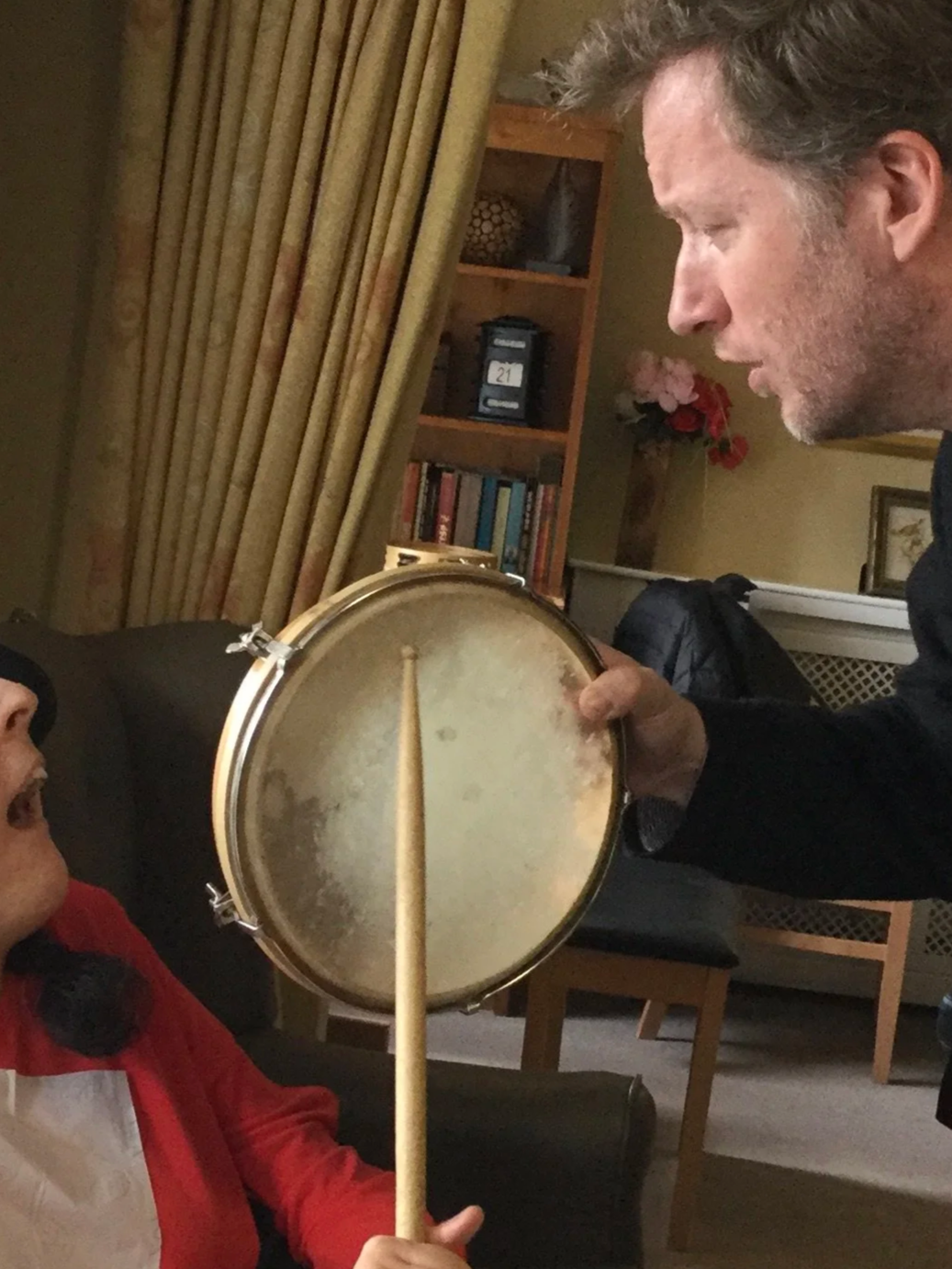
This may include residents who are:
living with moderate or advanced dementia
non-verbal or bed-bound
experiencing anxiety, agitation or isolation
approaching end of life
Sessions usually take place in the resident’s room or another quiet space.
Where appropriate, family members may also be involved.
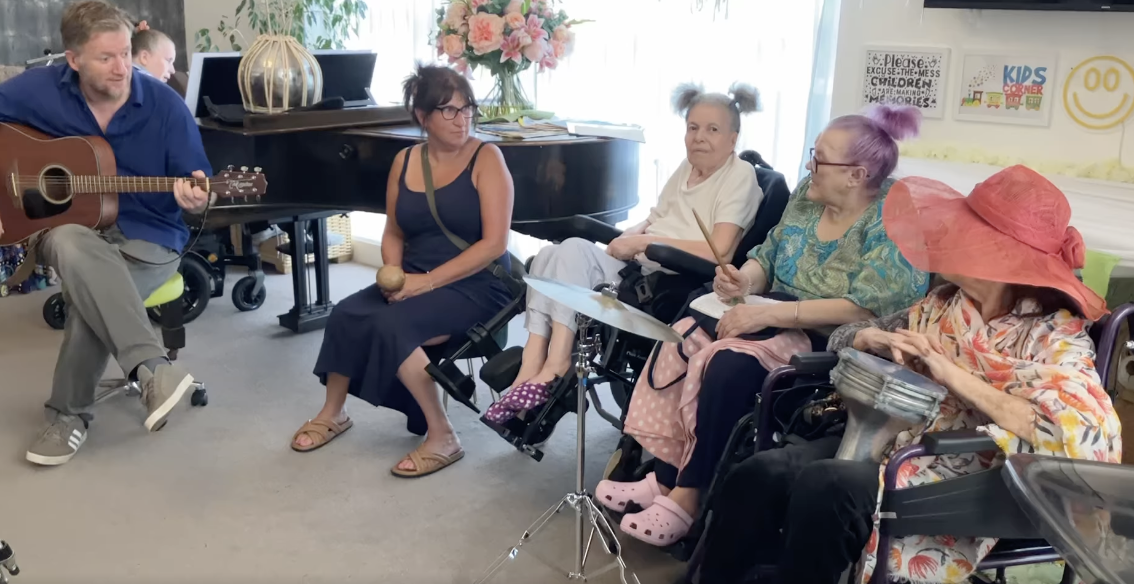
Groups
Group music therapy creates shared experiences, where residents of varying abilities can participate meaningfully together.
Through singing, playing instruments, movement, songwriting, listening or conversation around music, residents are encouraged to engage, express themselves and connect with others.
Mixed-ability groups are common, so sessions are structured so that everyone can take part meaningfully, taking into account each group member’s needs and preferences.
Staff and relatives are often encouraged to join in; when making music together, the usual roles of ‘carer’ and ‘cared for’ soften, allowing everyone to meet as equal participants in the music.
Community
Music therapy can also support the whole community of the home.
Creative projects and musical events bring residents, staff, families and local communities together, helping to strengthen relationships & create a sense of identity.
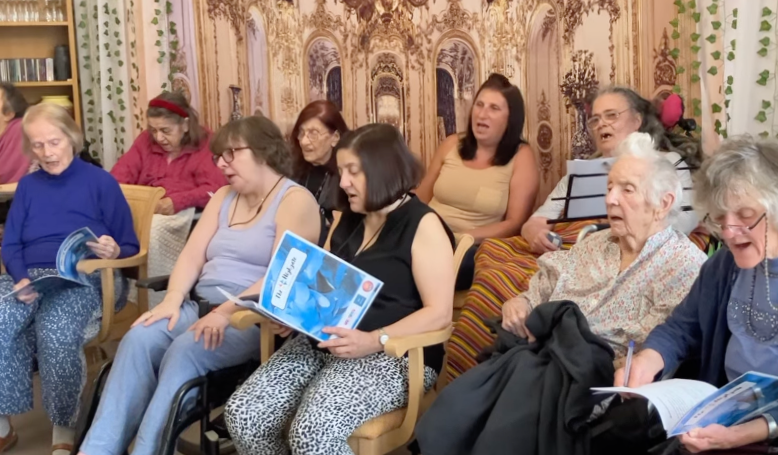
Community projects I have run in care homes:
Choirs
Songwriting projects
Partnerships with local schools & nurseries
Resident-staff-relative bands
Collaborations with arts organisations
Community music events within the home
Working Together
Music therapy works best when sessions take place regularly.
Consistent contact allows residents to become familiar with both therapist and session format, develop trust, & enables the work to respond to each resident’s needs and musical preferences.
My work combines regular individual and group sessions alongside occasional community creative projects, shaped in conversation with each home.
I work closely with carers, nurses, managers and wellbeing teams to develop a music therapy service that best supports their residents’ emotional wellbeing, communication and connection.